
NBM Director Scott Bradshaw shares practical steps for controlling cost, programme and delivery risk on building safety projects.
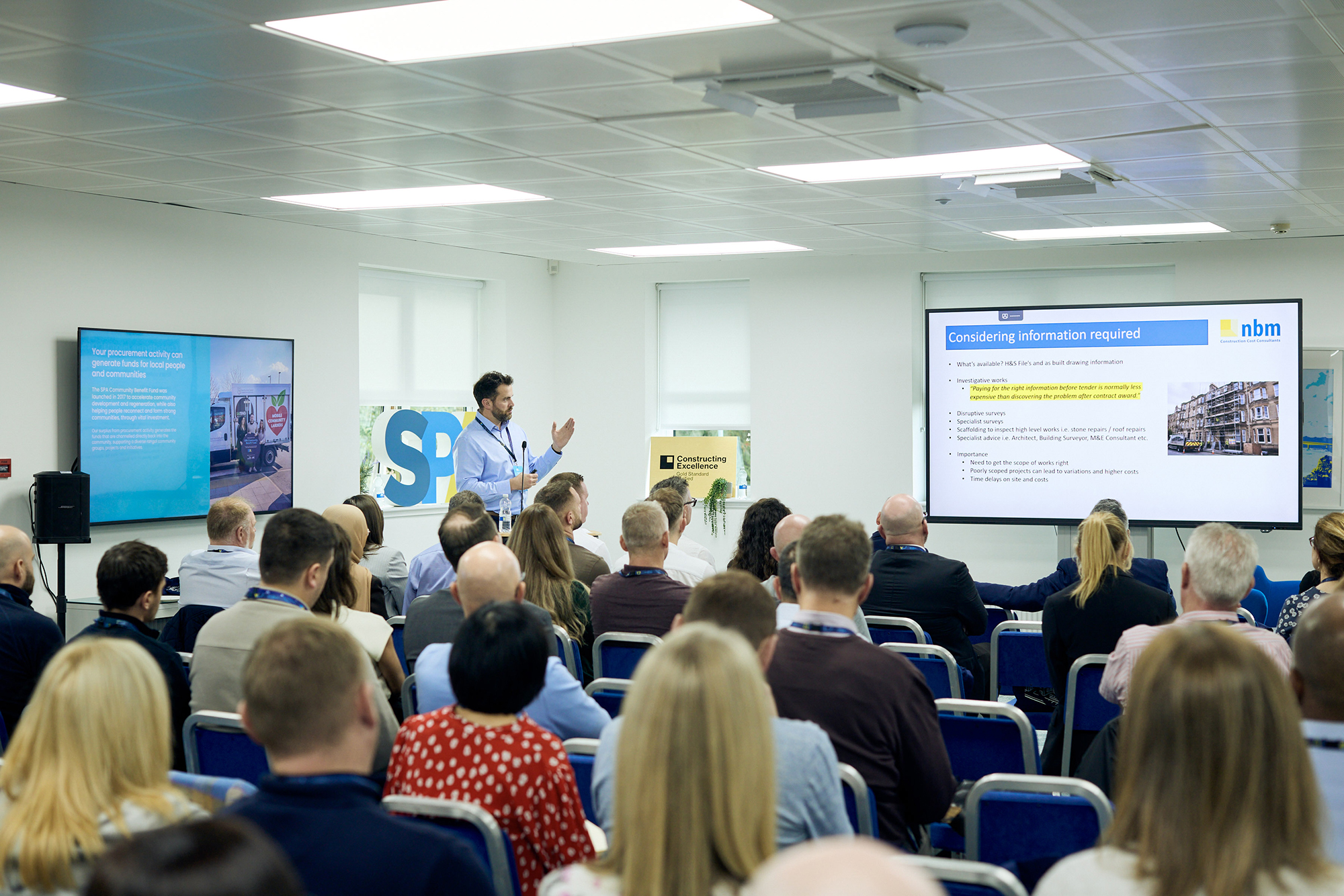
NBM Director Scott Bradshaw recently spoke at the Scottish Procurement Alliance AGM, sharing a quantity surveyor’s perspective on how public bodies and social landlords can manage building safety projects more effectively.
The event marked SPA’s tenth anniversary and brought together representatives from across Scotland’s housing, legal, procurement and built environment sectors to discuss the safety and long-term management of existing buildings.

During his presentation, “Getting Building Safety Projects Right”, Scott considered the common causes of increased costs, delays and delivery difficulties. His central message was that many of these risks can be reduced through better investigation, preparation and decision-making before the project reaches the market.
The first step is to define the problem and what the project needs to achieve.
This means considering the urgency of the work, the available budget, the condition of the existing building and any procurement requirements that may affect how the project proceeds.
The brief should also establish a clear scope of work. If the scope remains uncertain when contractors are invited to tender, their prices may include significant allowances for risk, or important work may only become apparent after the contract has been awarded.
As Scott explained during the presentation:
“Investing in the right surveys and investigations before tender will normally cost less than discovering unforeseen problems after the contract has been awarded.”
Clients should review the information already available, including health and safety files, as-built drawings and previous reports. Further investigation may then be required to understand the building’s condition and define the work properly.
Depending on the project, this could involve opening-up works, specialist surveys, access equipment to inspect roofs or high-level stonework, or advice from architects, building surveyors and mechanical and electrical consultants.
This initial investment helps establish a more reliable scope, gives contractors better information on which to base their tenders and reduces the likelihood of unexpected variations once work begins.

The contract should reflect the nature, complexity and level of certainty associated with the project.
Consideration should be given to whether the full extent of the work is known, whether specialist design input will be required and whether any elements will include contractor design.
Using an appropriate industry-standard contract can provide greater clarity for both the client and tenderers. The accompanying tender documents should explain the scope, programme, working environment and performance requirements without making the procurement process unnecessarily complicated.
Where work will take place in occupied buildings, the documents should also clearly explain access restrictions, tenant considerations and how disruption will be managed.
Careful preparation must continue once a contractor has been appointed.
A clear pre-start meeting provides an opportunity to agree how the project will operate and identify any remaining risks. Communication with clients, consultants, contractors, residents and other stakeholders should then continue throughout delivery.
Pre-commencement surveys and pilot properties can help confirm the proposed approach before work is rolled out more widely. Materials with longer lead times should also be ordered early, particularly where delays could leave occupied properties disrupted for longer than necessary.
Establishing the expected quality standard from the first completed area, maintaining regular discussions about cost and applying effective contract administration can help keep the project on programme and reduce avoidable disputes.
Building safety projects often involve existing properties where conditions cannot always be fully understood from drawings or visual inspections alone. However, a well-defined brief, appropriate investigation and a suitable procurement strategy can significantly reduce uncertainty.
Taking the time to establish the scope properly before tender provides a stronger foundation for cost control, programme management and successful delivery.
If you would like further information about Scott’s presentation, or would like to discuss the planning and delivery of an upcoming building safety project, contact Scott at scott.bradshaw@nbm.bz.
Further presentations and resources from the AGM are available through the Scottish Procurement Alliance post-event page.
Photos courtesy of Peter Dibdin

